



What should a legal website include?


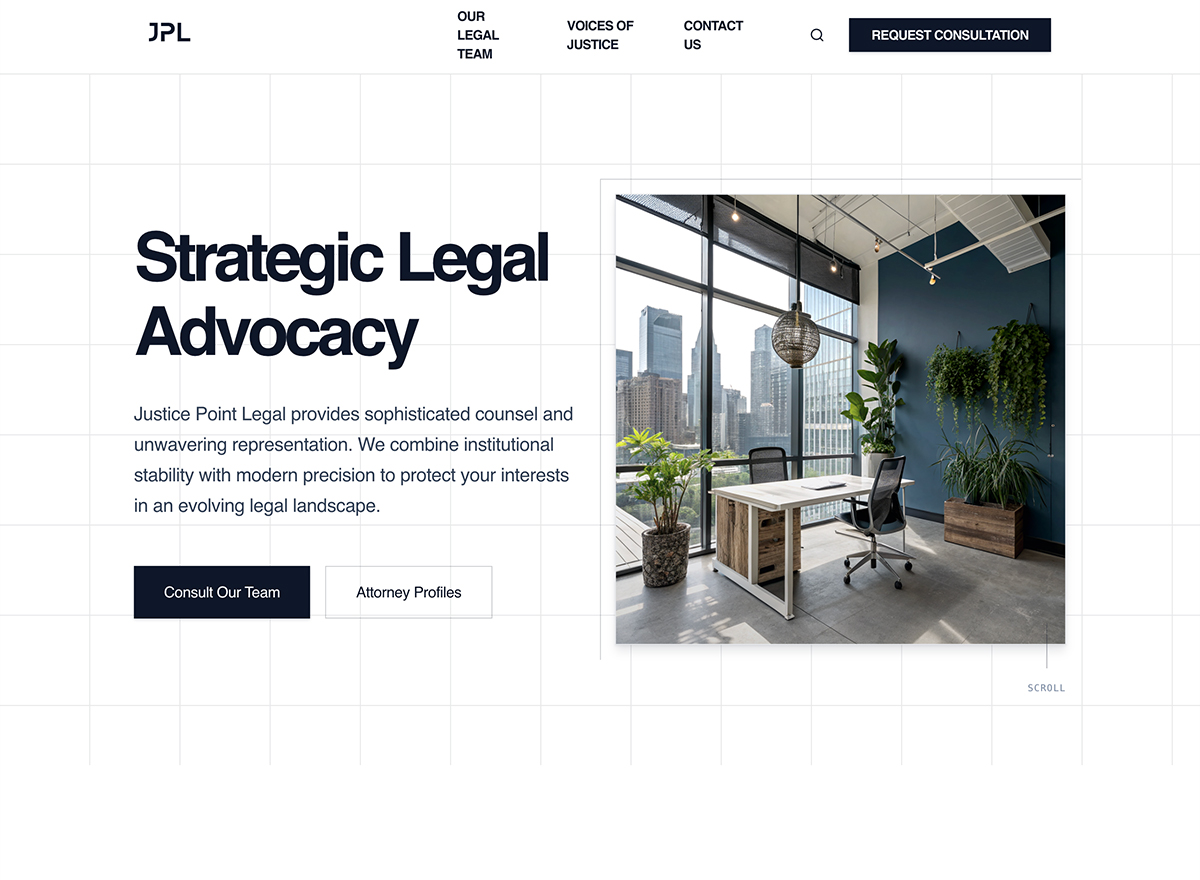
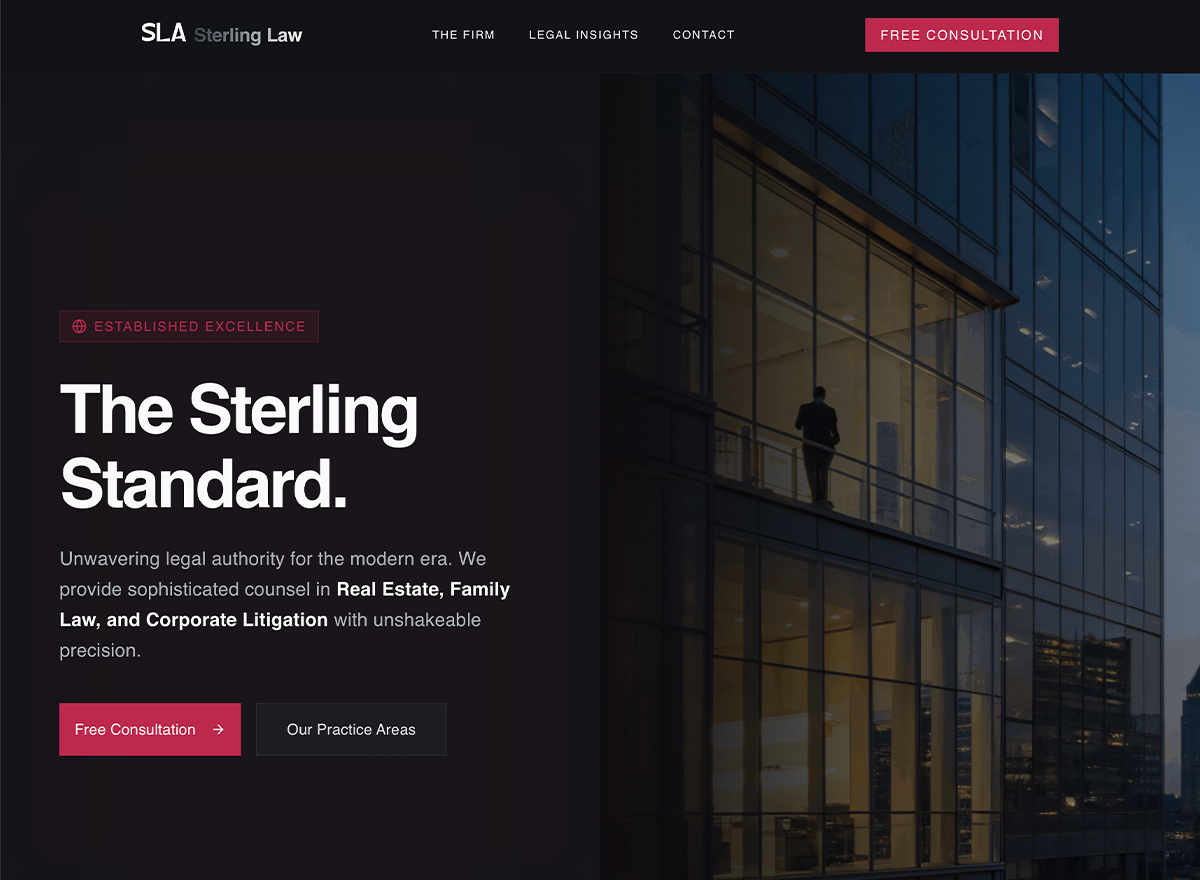
Your practice areas, credentials, proof you're trustworthy, and a clear way to request a consultation. Legal clients are cautious and high-stakes, so trust and clarity lead. The template comes with these sections ready, so you fill in your details instead of building from scratch.
How do I present my practice areas?
Practice area sections come with the template, so laying out the areas of law you handle is a matter of filling them in. Clients search for their specific issue, so distinct pages guide them and help you rank. You adjust them as your practice shifts.
How do clients request a consultation?
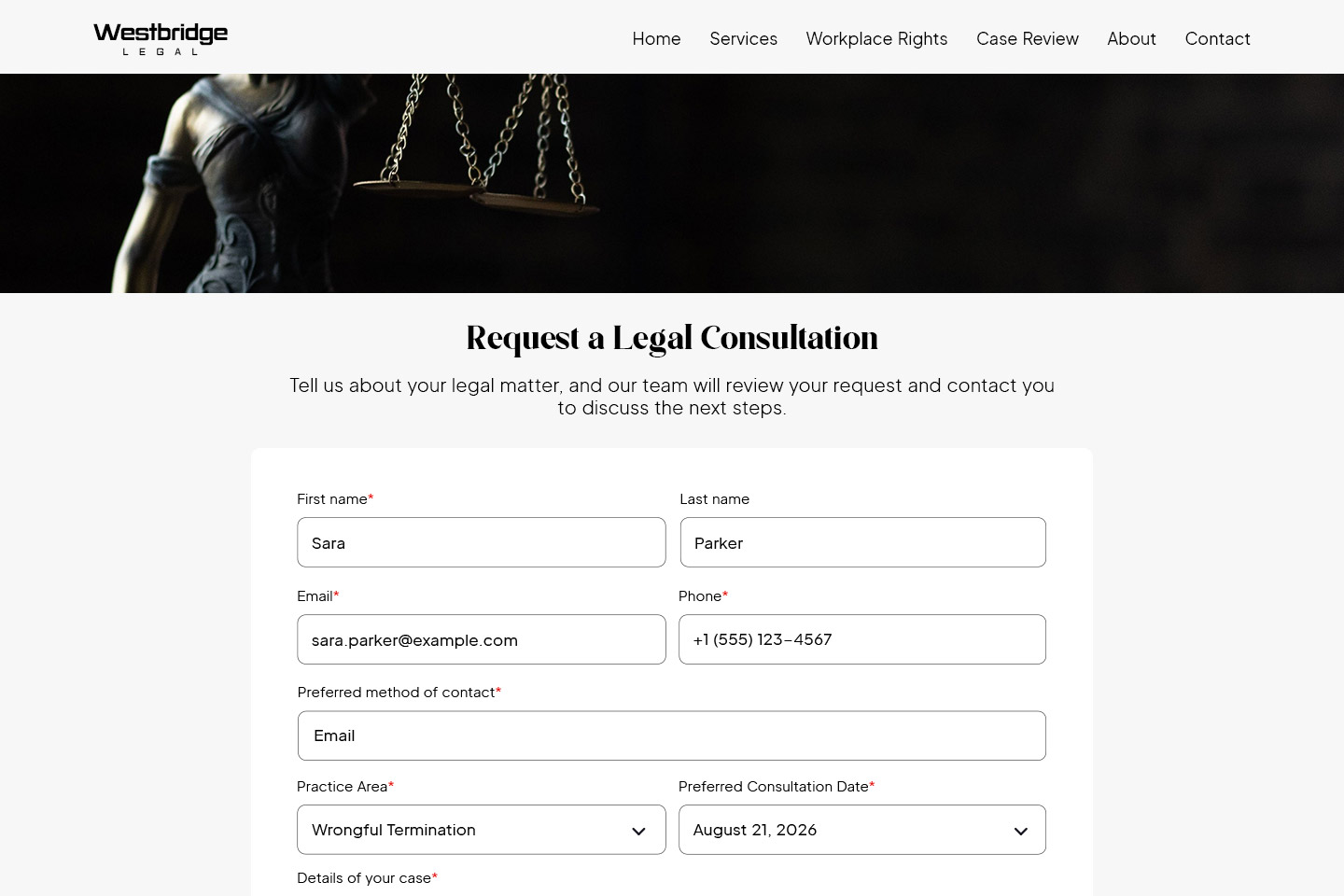
A consultation form is built into the template, so prospects reach out and share their situation right away. Most legal work starts with that first contact, so making it easy matters. Requests route straight to you, ready for the details you need.
How do I build trust with potential clients?
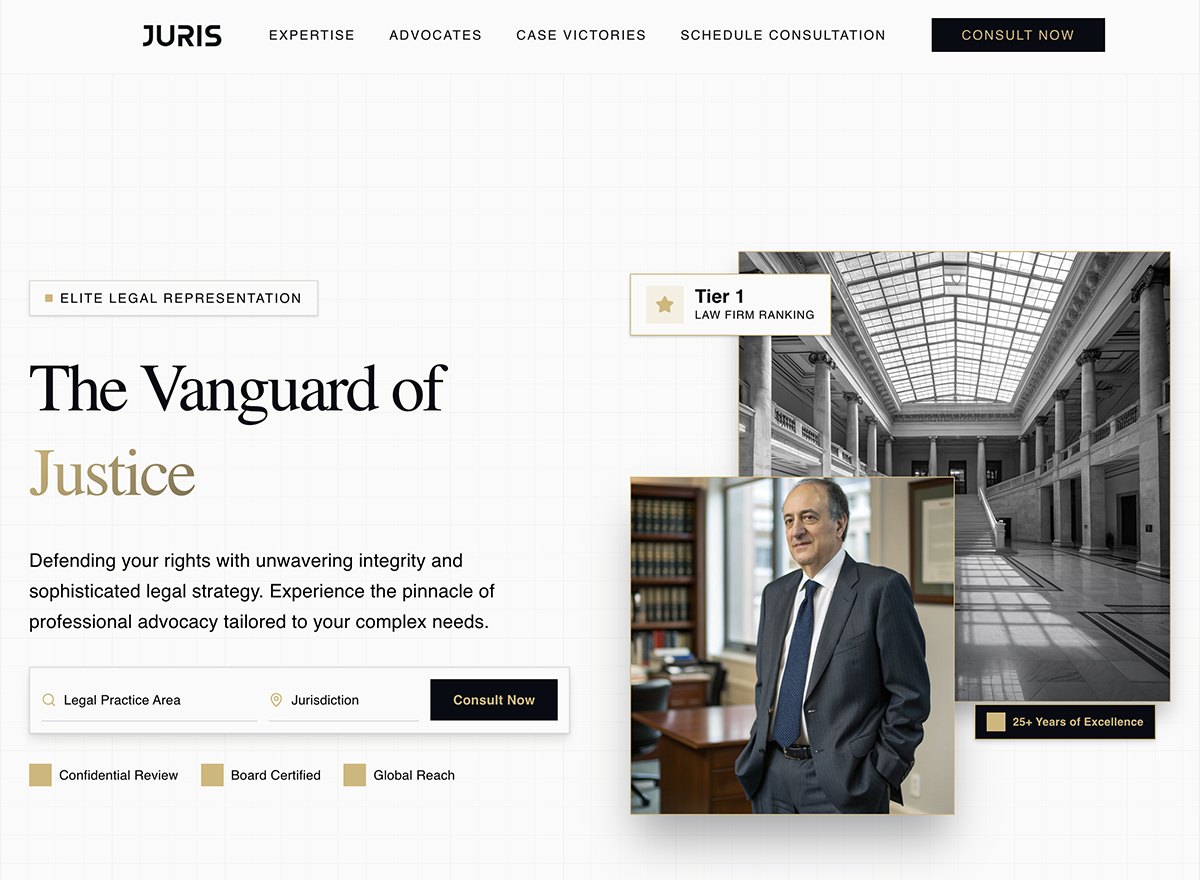
Show your credentials, experience, results, and client testimonials. In law, proof of expertise is what turns a nervous visitor into a client. The template gives these trust signals prominent placement, so you drop yours in.
Can I share legal insights or a blog?
Yes. A blog lets you publish plain-language guidance that shows expertise and pulls in search traffic from people with legal questions. Helpful content builds authority with cautious clients. Posting stays quick.




 Back
Back

