Can customers order groceries for delivery or pickup?


Yes. You can offer local delivery and in-store pickup at checkout, so customers choose how they get their order, which is exactly how people expect to shop for groceries now. Meeting them with both options captures more orders. You set the delivery zones and pickup details to match how your store operates.
Can I manage a large catalog of products?
Yes. Grocery means hundreds or thousands of items, and the store handles unlimited products with categories and search, so shoppers find what they need fast. You can even generate product descriptions with AI, which saves serious time on a catalog that size. Clear organization, produce, dairy, pantry, is what keeps a large store shoppable.
Can I handle perishable items and stock levels?
Inventory tracking keeps your listings in line with what's actually on the shelf, which matters most with perishables and limited stock. Customers see real availability instead of ordering something that's sold out. Keeping stock accurate protects the experience for a repeat-heavy business like groceries.
How do I build a grocery store website with these templates?
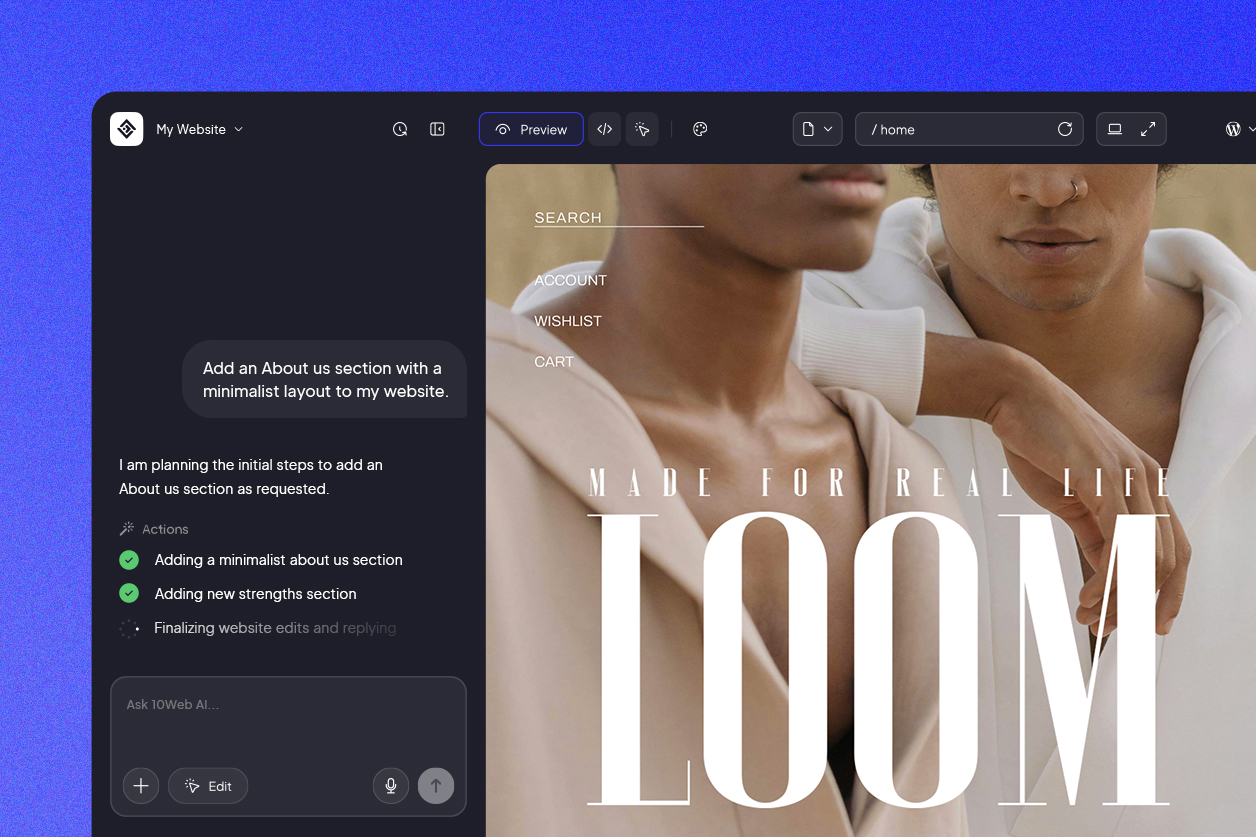
You pick a grocery template, make it yours in 10Web's AI-powered visual editor, either by describing changes or editing manually, and take it live. Built on WordPress and WooCommerce, there's no code involved, and most stores launch the same day. Updating products or this week's deals afterward only takes a few minutes.
Will local shoppers find my grocery store online?
Grocery is intensely local, "grocery delivery near me" or your store plus the neighborhood, so local search is the target. Running on Google Cloud with fast, clean, SEO-ready pages, your site starts strong, and adding your location, delivery areas, and product categories helps nearby shoppers find you when they're ready to order.




 Back
Back

