There’s a very particular kind of panic that only agency owners know. On the outside, everything looks great. Leads are coming in, referrals are steady, the sales pipeline finally has some weight to it. You’re winning projects you used to dream about.
On the inside, your Slack looks like a slow-motion car crash.
Deadlines keep sliding. Everyone is at capacity. That one senior developer has become a single point of failure. The account team is promising dates you’re not sure you can hit. You’re not worried about finding work anymore. You’re worried about fulfilling the work you already sold.
You now find yourself not asking “How do we get more clients?” but “Who is going to build all these websites?”
For most agencies, the answer lives somewhere between three options:
- hire in-house
- build a freelance bench
- or lean on white label web services and platforms
All three can work. All three can hurt you if you choose them blindly. Each one affects your margins, your operations, and your sanity differently, and the mix you choose determines whether you’re building a business that compounds or one that resets to zero every month.
What a website means to clients now
Clients no longer buy a website. They buy an ongoing digital presence that works without them having to manage it.
A typical client expects:
- Fast load times and clean mobile experience, without SEO problems
- The ability to push changes live without filing a development ticket
- Hosting, security, and backups handled invisibly in the background
- A single point of contact when something breaks
This shift changes what your delivery model needs to do. You’re not just figuring out who builds the site. You’re figuring out who maintains it, who keeps it performing, and who the client calls six months from now. The way you staff and deliver web work is the product, not just the output.
Three ways to staff your web work
Strip away the org charts and you’re left with three delivery models. Most agencies use all three at some point. Knowing which one is your default and when to switch is closely tied to your agency’s success rate.
In-house teams: control at a cost
In-house gives you designers, developers, and project managers who share your culture, tools, and standards. It works well for complex, high-value builds, product-heavy sites, long-term retained accounts, deeply custom experiences.
However, in-house capacity costs money whether you’re busy or not. Salaries, benefits, and overhead show up on your books every month, independent of how many sites ship. One slow quarter can squeeze your margins in ways a project-by-project model never would.
Freelancers: flexibility with a management tax
Freelancers are the natural pressure valve. When projects stack up, you tap your network and the schedule starts to look possible again.
The tradeoff is coordination overhead. Someone on your team has to find, brief, review, and integrate that external work every single time. Used tactically, freelancers are excellent for demand spikes and specialist gaps. As a core delivery model, they make consistent quality, and consistent ongoing services hard to maintain.
White label services for agencies: capacity and recurring revenue
White label sits in a different lane. A specialist partner or platform handles a significant portion of the build, hosting, and maintenance under your brand. The client relationship stays entirely with you. The production burden doesn’t.
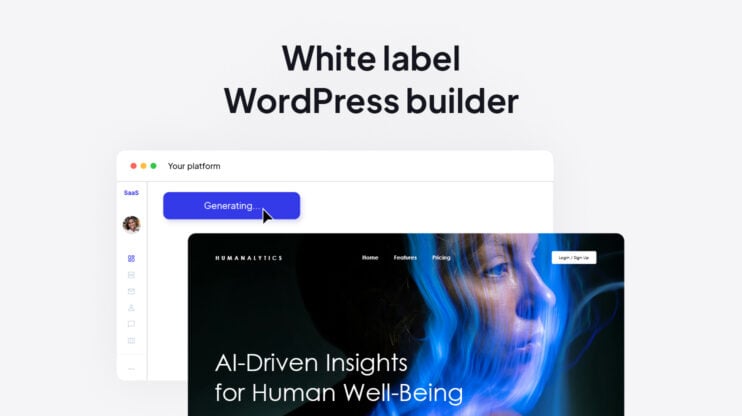
White label has evolved beyond “a dev shop building from your briefs.” AI-powered platforms now let you generate a full WordPress site from a client brief, then have your team refine design, copy, and integrations before launch. The platform handles hosting, performance, and security as part of the stack. The real advantage most agencies miss is what comes after launch.
The revenue model in white label services for agencies
White label web services unlock recurring revenue for agencies, but only if you treat the website as an entry point, not a final deliverable.
Most agencies close the project and walk away. The site goes live, the invoice clears, and the client relationship goes quiet until the next redesign cycle. The website is the most natural anchor for an ongoing relationship. Once a client trusts you with their site, you become the logical owner of everything that touches it:
- Managed hosting and uptime monitoring
- Security patches and performance optimization
- Content updates and campaign landing pages
- Analytics, SEO reporting, and conversion tracking
- Redesigns and feature expansions as the business grows
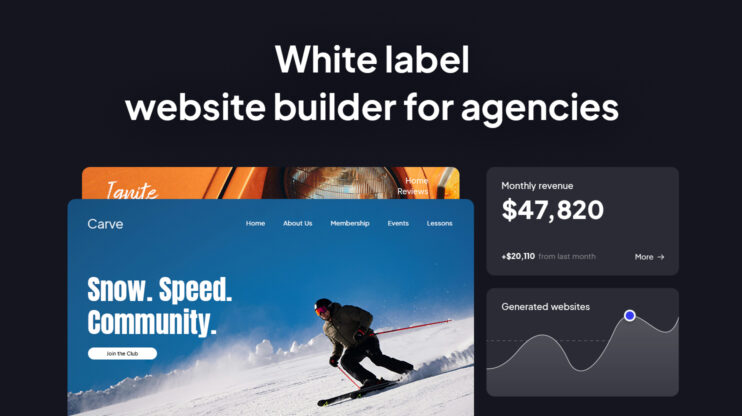
The math compounds fast. A $3,000 website project that converts to a $300/month care plan generates $3,600 in year one, before any upsell. Scale that across ten active clients and you have a meaningful recurring revenue base that doesn’t require winning new business every month to sustain itself.
White label platforms make this structurally easy. When the underlying platform already bundles hosting, security, and performance monitoring, you don’t need to build the infrastructure to sell the care plan. You’re packaging what’s already there under your name.
One practical note: the care plan conversation lands better before launch, not after. Once the project feeling fades, the ask reads like an upsell. When you introduce it during delivery, “here’s how we handle what happens after go-live,” it’s just the next step in the engagement.
Launch fully managed WordPress sites with your logo, pricing, and dashboard!
Sell Hosting Under Your Own Brand
Follow the money
Imagine shipping ten mid-level marketing sites a month. In-house, you carry fixed salaries, benefits, and overhead across designers, developers, and a project manager. Good months look great. Slow months hurt.
With freelancers, direct costs track closer to your output. Five sites shipped, five invoices. But the invisible coordination cost is real, and it makes delivering consistent ongoing services hard to systematize.
With a white label platform, costs come packaged: a per-site fee or monthly subscription. That structure maps cleanly onto care plan pricing on your side. The gap between what you pay the platform and what you charge the client is your recurring margin, and it compounds across your client book as you grow.
Add AI generation and the economics shift further. When producing a baseline WordPress site takes hours instead of days, the per-site cost drops. That makes care plan margins healthier, and it frees senior team time for strategy and retention rather than production.
Hybrid is the new normal
Agencies that scale well don’t commit to one model. They treat each option as a routing decision based on the work in front of them.
A sustainable hybrid usually looks like:
- A small senior in-house core that owns standards, key accounts, and genuinely complex builds
- A white label platform handling standard site volume and the ongoing hosting and maintenance layer
- A curated freelance network filling specialty gaps neither of the above can cover
In this setup, white label isn’t replacing your team. It’s absorbing the structurally similar work that doesn’t need your highest-paid people — and powering the recurring revenue layer that project-only delivery can’t build reliably.
Where AI-powered white label platforms fit
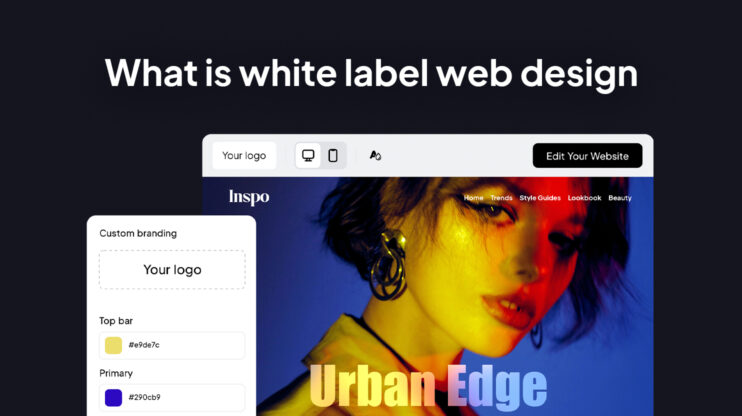
AI-powered white label platforms sit at the intersection of production speed, brand control, and recurring revenue infrastructure. Bring the brief, the strategy, and the client relationship. The platform provides the build engine, managed hosting, a white-labeled dashboard, client portals, and branded billing. The client sees your agency at every touchpoint.
The workflow in practice:
- Collect the brief: business type, key pages, tone, brand assets, reference sites
- Feed it to the AI builder, a structured, production ready WordPress site comes back with layout, content architecture, and placeholder copy
- Your team refines design, copy, and integrations
- The site goes live on managed hosting
- The care plan conversation happens before the launch call ends
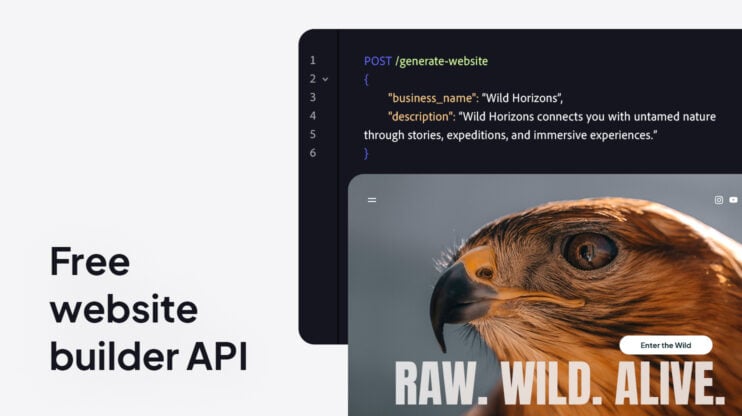
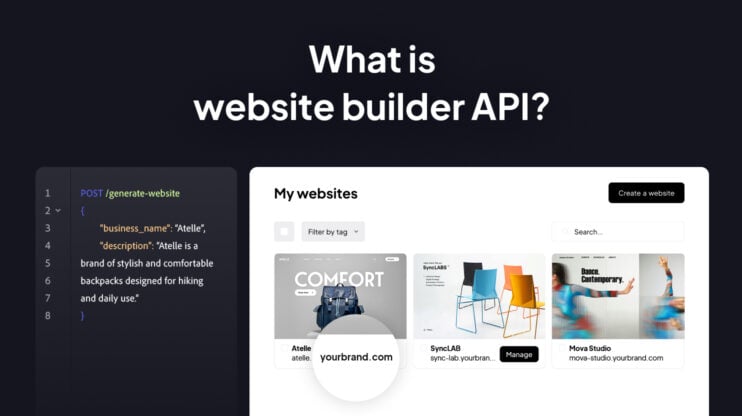
10Web’s Reseller Dashboard and Website Builder API are built for this model. Agencies manage client workspaces, set their own pricing, handle billing, and use the open API to embed site generation into their own workflows. The white-label AI builder stays invisible, your brand is what the client sees.
What should you do?
The right model depends on your volume, your complexity, and your revenue goals.
If your agency runs on a small number of complex, high-touch builds, in-house investment is the right call. If you’re handling a steady stream of standard marketing sites and want to build recurring revenue without adding headcount, white label deserves to be a core part of your stack, not an afterthought.
The lowest-risk way to test it: take three to five upcoming projects, run them through a white label platform, and track what happens to your timelines, margins, and team bandwidth. Then look at what you could have offered those clients as an ongoing service. The answer usually makes the business case on its own.
FAQ
What are white label web services?
How is white label different from outsourcing or hiring freelancers?
Can white label web services support recurring revenue?
What services can agencies offer on top of a white label website?
Is white label more cost-effective than building an in-house team?
How should I price white label projects and what margins are realistic?