
Most agencies reach a point where delivering great work isn’t the real challenge anymore. The challenge becomes staying ahead of demand. Clients want more websites, faster turnarounds, deeper integrations, and ongoing support, all without increasing budgets. Meanwhile, agencies are trying to manage a shifting talent market, unpredictable workloads, and the pressure to deliver consistently good results.
That’s why so many are now looking beyond traditional outsourcing and exploring how to become white label web development partners themselves. In this model, your agency doesn’t just serve clients directly; you become the behind-the-scenes production engine for other agencies. You power their websites, their hosting, and their fulfillment under your own brand.
In the past, this required big teams and complex infrastructure. Now, white-label partnerships look very different thanks to AI-native builders, automated provisioning, and fully brandable platforms like 10Web. You can now run an entire development backend without hiring a large team or building your own systems.
Let’s break down how the model works, why it’s booming, and how agencies are using modern tools to step into this role with confidence.
What white label means in web dev
Most people hear the phrase white label and think of a generic product that gets rebranded and resold. That’s partly true but in web development, the idea goes much deeper.
At its core, white label web development means one company builds websites that another company sells under their own brand. The end client never knows a third party was involved.
Unlike old-school outsourcing, white label fulfillment isn’t someone else building the site for you. It’s a structured, invisible production system where:
- The agency keeps full ownership of the client relationship
- The development partner stays completely hidden
- Work is delivered through the agency’s brand, tools, and platforms
- The process is repeatable, consistent, and predictable
In other words, white label is outsourcing with professionalism, privacy, and process all included.
The operational side of white label work
In practice, white label web development covers everything a modern agency would normally handle:
- Website planning and architecture
- UI/UX design or template adaptation
- Development, integrations, QA, and launch
- Hosting, performance optimization, security, and backups
- Ongoing maintenance and updates
- Support that appears to come from the agency
Traditionally, agencies had to juggle contractors, dev shops, and freelancers, making white label fulfillment inconsistent and sometimes risky.
How to become a white label partner in 2026
Agencies that successfully transition into white label development partners don’t win because they work faster or cheaper. They win because they operate differently. The shift is less about adding new services and more about building a system that other agencies can reliably depend on. In 2026, white label success is built on three foundational principles.
1. Standardize your workflows
When you become a white label partner, you’re no longer delivering one-off projects. You’re delivering repeatable outcomes for multiple agencies at once. That only works if your internal processes are standardized.
Standardization means defining how work moves through your operation from start to finish. This includes:
- how projects are scoped and briefed
- how designs are selected, adapted, or generated
- how development, QA, and launch are handled
- how revisions and handoffs are managed
Instead of reinventing the process for every project, successful partners rely on templates, predefined site structures, and clear checklists. Briefs become structured inputs, not free-form documents. Website builds follow predictable paths instead of custom logic every time.
Over time, this consistency becomes part of your value proposition. Partner agencies know exactly what they’ll get, how long it will take, and how it will be delivered. In white label work, predictability is just as important as quality.
2. Automate everything possible
White label partnerships scale through volume, not heroics. That means removing manual effort wherever possible.
Modern platforms make this achievable. AI-powered website generation can turn a structured brief into a working site in minutes. Vibe editing allows teams to make fast, high-level changes without diving into code. Bulk actions let you apply updates, performance settings, or security rules across dozens or hundreds of sites at once.
Automation isn’t about cutting corners; it’s about protecting your team from burnout and your partners from delays. The less time your team spends on repetitive setup tasks, the more time they can spend on refinement, customization, and quality control.
Agencies that try to scale white label services without automation hit a ceiling quickly. Those that build automation into their workflows from day one can grow their output dramatically without growing their headcount.
3. Govern your output
This is the most important, and often overlooked, principle.
AI adoption in web development is now widespread, but trust in AI-generated output is declining. The reason isn’t quality; it’s control. Many teams can generate websites quickly, but few can clearly track how a site was built, who changed what, or why a decision was made.
White label partners must operate with strong governance. That means:
- clear version control and change history
- defined approval stages before delivery
- role-based access for teams and partner agencies
- auditability across sites and clients
When you’re responsible for powering other agencies’ brands, mistakes don’t just affect you, but also your partners’ reputations. Governance ensures that speed doesn’t come at the cost of reliability or accountability.
In a white label model, trust is your currency. Strong governance is what allows agencies to confidently hand over production without feeling like they’re losing control.
10Web’s White Label Website Builder
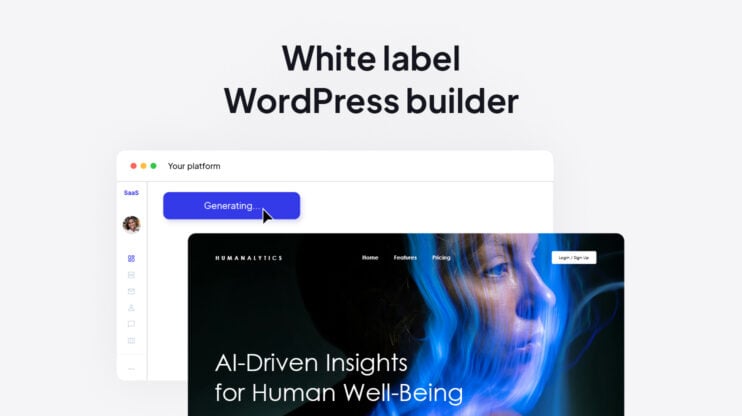
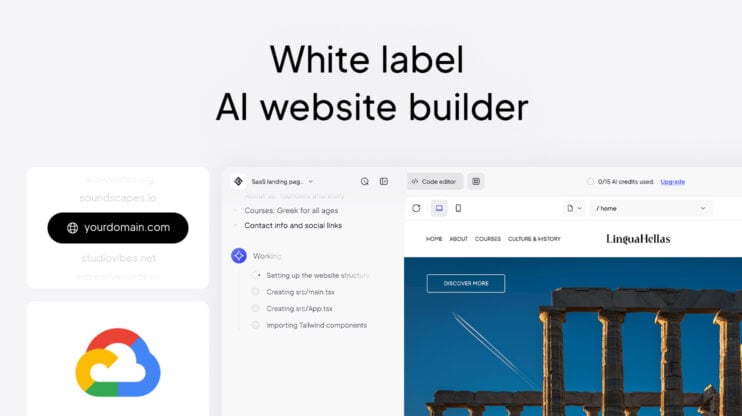
10Web’s White Label Website Builder is created specifically for agencies who want to become silent fulfillment partners.
With 10Web’s white-label package, you can:
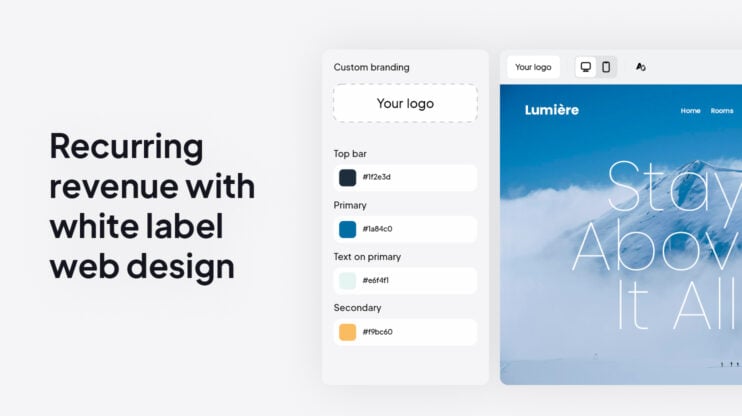
- replace all 10Web branding with your own
- provide a full, branded WordPress backend to clients
- generate and manage websites through your own dashboard
- resell hosting, AI tools, domains, backups, and performance services
- onboard clients through a platform that looks entirely like yours
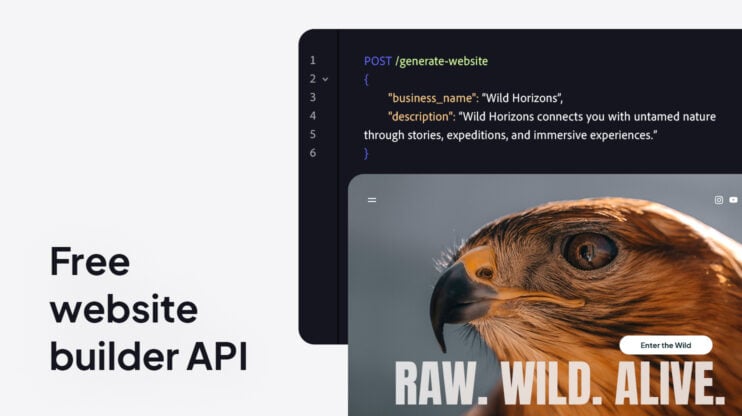
- even embed the builder into an existing SaaS or service using the API
On top of that, the platform handles the infrastructure: hosting, SSL, backups, CDN, security, and performance, so your agency can focus purely on production and growth. For agencies aiming to step into white label fulfillment without hiring a technical team, this is one of the most complete, ready-to-deploy solutions available.
Becoming a partner vs. building an in-house team
Hiring developers is expensive; salaries, training, management, QA, and the risk of inconsistent workloads make it difficult to scale profitably. A white-label platform flips this dynamic.
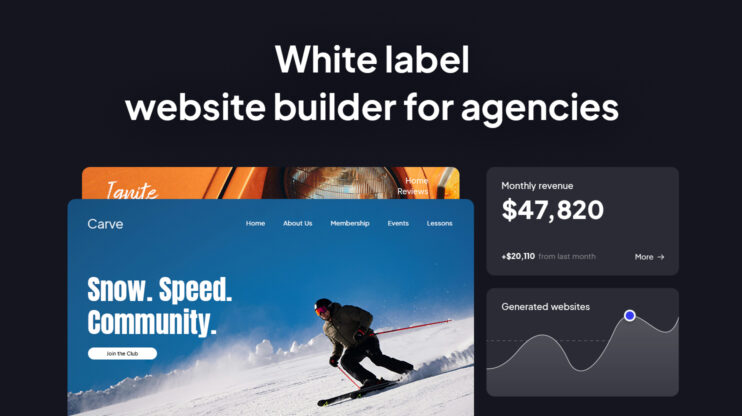
Instead of expanding your payroll, you expand your capability by reselling infrastructure, hosting, AI creation tools, and ongoing maintenance. With 10Web’s usage metering and billing integrations, this becomes a recurring revenue engine rather than a cost center.
Why agencies are turning to white label partnerships
Most agency bottlenecks come from the same place: not enough hands, not enough hours. Even well-staffed teams struggle with overlapping deadlines, specialty tech requests, and the complexity of modern builds.
At the same time, when it comes to outsourcing, many agencies feel burned by inconsistent quality, unreliable communication, or worse, a subcontractor who accidentally contacts their client. When your reputation is on the line, outsourcing and hoping for the best isn’t a strategy.
A white label partnership solves this by letting you deliver work under another agency’s brand, with a level of control and consistency that outsourcing can’t match. And with platforms like 10Web, agencies can even replace all 10Web branding (the dashboard, the builder, the hosting, and the WordPress admin) with their own identity.
This ability to disappear behind your partners’ brand is exactly what makes white label fulfillment so valuable in today’s market.
What it means to become a white label development partner
Becoming a white label partner changes your agency’s role in the ecosystem. Instead of taking on individual client projects one at a time, you become the operational engine behind multiple agencies at once.
This also means handling more than just development. A modern white label partner offers:
- hosting and performance management
- automated provisioning
- structured onboarding
- consistent SLAs
- invisible fulfillment workflows
- brandable dashboards
- resellable services
With 10Web’s multi-tenant setup — organizations → clients → projects — agencies can manage entire fleets of sites in a controlled, scalable environment. Everything from backups and SSL to user roles is handled directly inside the partner dashboard.
It’s the kind of infrastructure that used to require engineering teams. Now it’s turnkey.
Conclusion
Becoming a white label web development partner used to mean hiring big teams, managing complex infrastructure, and operating behind a curtain. Now it means something far more scalable: running your own branded platform, using AI to speed production, and providing a full-stack, invisible fulfillment layer for other agencies.
With 10Web’s white label builder, dashboard, hosting, and API ecosystem, any agency can become the silent engine behind dozens of client websites. It’s a shift from doing the work to powering the work, and it’s becoming one of the most profitable agency models in the industry.