You’ve seen the pattern. WordPress provisions in 90 seconds. The welcome email goes out. Then nothing. No first login, no DNS change, no support ticket. Just a cancellation notice 72 hours later.
You’re not losing that customer on uptime or price. Hosting a website and having a website are two different things. Your plan covered only one of them.
The platforms taking your customers have built the second step into the product. Embedding a website builder into your hosting plans closes that gap and opens three distinct revenue paths that don’t require building anything in-house.
Hosted and live are not the same
Your customer isn’t buying hosting. They’re buying a website they don’t know how to build.
Your post-provisioning support tickets tell the story. The most common requests are about how to add a page, how to change the look of a site, or where to start. These aren’t WordPress questions. They point to a product gap. The customer bought the means but never reached the end.
When customers contact support to complete something the product should have made possible from the start, the problem is the product’s scope. Better onboarding won’t close that gap. The product needs to complete the job the customer came to do.
According to the 2026 Web Hosting Trends Report , surveying 446 hosting providers globally, 41% of hosting companies cite competition from all-in-one platforms as their top external threat. Not other hosting companies. All-in-one platforms.
A customer who launches a website on your hosting has a structural reason to stay. Moving to another platform means transferring their domain, reconfiguring DNS, and rebuilding the site from scratch. That friction creates a switching barrier no discount can match. A customer who provisioned WordPress and stalled has nothing binding them to your platform.
Three revenue paths
There is a fix, and it is operationally simpler than most hosting companies expect. One integration adds the step that turns a provisioned server into a live website and opens three distinct revenue models from the same technical setup.
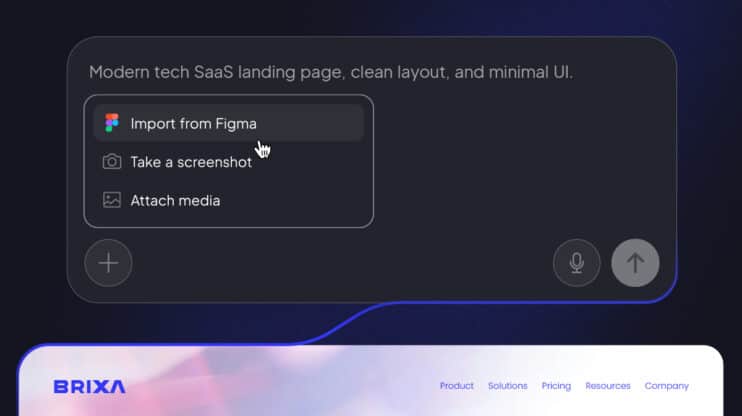
10Web is an agentic AI website builder for WordPress hosting providers. A team of AI agents generates production-ready WordPress sites from a prompt, deployed under your brand, on your hosting infrastructure. One integration supports three distinct revenue models, and most hosting partners run more than one simultaneously.
1. Bundle it into every plan
Make the AI website builder a feature of your hosting plan rather than a separate purchase. Customers encounter it at the plan-selection stage, before signup, not after.
Revenue impact: higher signup conversion and increased average revenue per customer across all tiers. In a market where shared hosting plans are functionally identical on server specs, the builder becomes a concrete reason to choose your plan.
2. Sell it as a paid upgrade
Offer the builder as an optional add-on on existing plans. Opt-in, incremental, with clean attribution on every activation.
This path turns a segment you already have data on into a high-converting upsell target: customers who provisioned WordPress but never launched a site. They paid for hosting and didn’t get the outcome they wanted. A direct message sent 48 hours after provisioning, while intent is still active, converts at rates cold acquisition campaigns don’t approach. Adding a time-limited offer to the message sharpens the economics further.
3. Launch it as a standalone product
Build a separate product with its own landing page, pricing, and audience. This is the path for hosting companies entering the SMB website creation market as a product, not just a feature addition. New revenue from customers who weren’t in your funnel before.
10Web’s Website Builder API lets you generate custom, branded demo sites programmatically. One per prospect, before they’ve signed up. The prospect sees their website before they see a pricing page. The demo becomes the acquisition tool.
Activating customers across all three paths
Beyond choosing a path, three trigger points consistently outperform others:
- Support tickets. When a customer asks how to design their site, change a theme, or add a page, they’re telling you they need the builder. A support response with a direct upgrade link converts a support cost into a revenue moment without adding friction to the support experience.
- Plan renewal. Customers who have never launched a site are your highest churn risk and clearest upsell candidate at the same time. A renewal offer framing the builder around the outcome they haven’t gotten yet converts at-risk renewals into higher-tier plans with a reason to stay.
- Post-provisioning trigger. The 48 to 72 hours after WordPress is provisioned is the highest-intent window in the customer’s lifecycle. A single, direct message at the 48-hour mark reaches the customer while the motivation to build is still present.
What the integration requires
Embedding a website builder into your hosting platform requires two components and takes under two weeks from contract to live product.
Hosting companies assume this means a multi-month integration project, a new vendor in their support queue, and a new category of operational complexity. The technical reality is two components.
Component 1: the WordPress license plugin. This installs on each WordPress site you provision. It auto-installs the agentic builder theme, editor, and required components, then self-deletes. There’s no persistent plugin footprint on the customer’s site and no visible third-party layer in the customer experience.
Component 2: the Gateway API. A workspace-level API for site lifecycle management across your customer base. It handles limits, usage tracking, and deletion, and connects to your existing provisioning workflow.
Sites run on your infrastructure. The full experience runs within your brand. Customers interact with your dashboard, your domain, your branding throughout. 10Web is never visible. The full integration guide is available at integration guide. The standard timeline is under two weeks from signed contract to live product.
Why you don’t save when you build in-house
Adding a website builder to your hosting platform is not a one-time development project. It is a continuous commitment that runs alongside your existing engineering investment, not instead of it.
Building a feature-complete agentic website builder for WordPress requires ongoing maintenance across multiple fronts:
- AI model updates as generation quality advances
- Compatibility across the WordPress plugin and theme ecosystem
- performance optimization
- WooCommerce support
- Security
According to the same report as mentioned above, 36% of hosting providers cite integrated AI and automation as the single biggest unmet gap in their current control panel stack. That gap is a moving target. The underlying technology changes faster than most product roadmaps can absorb.
The hosting companies that integrated a proven solution earlier are not standing still. They are on a second or third product iteration while a company starting now will spend the first 12 months reaching a baseline the market has already moved past. The build decision carries a timing cost measured in product generations, not just engineering hours.
Where the market stands
50% of hosting providers globally plan to expand professional services, including site builds, as a new revenue stream in 2026. The providers acting now are not waiting for perfect conditions. They are establishing the product, the price point, and the customer expectation in their market before competitors do.
The margin pressure adds urgency. 65% of providers reported revenue growth in 2025, but profitability is harder as operational costs and pricing pressure compound. Website services carry higher margins than infrastructure alone, and the addition doesn’t require rebuilding the stack that already works.
10Web has 2M+ websites generated on its platform and works with 1,000+ B2B hosting partners. The window to be first in your specific market is open. Moving now means your customers build their sites on your hosting before a competitor offers them the same.
FAQ
What are the technical requirements for embedding a website builder into a hosting offering?
font-weight: 400;”>The integration is built for WordPress hosting environments. You need the ability to deploy a plugin at the site level and API access at the workspace level for lifecycle management. There is no new server infrastructure required, no control panel rebuild, and no persistent plugin footprint on customer sites after installation. The integration path works with standard WordPress hosting setups, including cPanel and Plesk environments.
Will my customers see my brand or the builder provider's brand?
Your customers see only your brand. The integration is a full white-label solution: your URL, your dashboard, your branding at every touchpoint. The underlying provider is not visible to customers. This is not a co-branded iframe or a redirect — the builder behaves as a native feature of your hosting environment.
Does customer data stay on my infrastructure?
Yes. Sites are hosted on your servers, not the provider’s. The builder handles generation and tooling; the actual WordPress sites, their files, and their data live on your infrastructure. This matters for customer trust, compliance, and your ability to own the long-term customer relationship.
What is the difference between bundling the builder and selling it as a paid upgrade?
Bundling means the builder is included in your hosting plan at no extra cost. It works as a conversion and retention feature — a concrete reason to choose your plan over a functionally identical alternative. A paid upgrade is an opt-in add-on with its own price point and attribution. Bundling typically reduces early churn and improves plan selection. The paid upgrade generates direct incremental revenue with measurable ROI per activation. Most hosting companies start with one model, validate it, then add the other.
How does this compare to Extendify or Nova?
Extendify is an onboarding tool. It helps customers get past the blank WordPress screen with template-based content, but it is not a full builder, customers outgrow it the moment they want custom design or more than a starter page. Nova by WebPros is a general-purpose AI builder not built specifically for WordPress: it lacks deep WordPress compatibility, has no WooCommerce support, and offers limited customization after generation. 10Web is built natively for WordPress, with full plugin ecosystem compatibility, WooCommerce support, site cloning, and Figma import, all running on your hosting infrastructure.
Who handles customer support when someone has a problem with the builder?
The integration is designed so the builder is a feature of your hosting product, meaning your support team fields requests through your normal channels. The white-label structure keeps the underlying provider invisible to customers. 10Web provides dedicated Slack support to hosting partners during and after integration, but the customer never interacts with 10Web directly. All support touchpoints remain yours.