
A jewelry website has to do two jobs at once: present your pieces with the care and detail they deserve, and make it effortless for customers to browse, trust, and purchase. Leading brands, like the legacy luxury houses Tiffany & Co. and Cartier, and modern direct-to-consumer jewelers, use thoughtful layout, strong imagery, and clear product storytelling to turn visitors into buyers.
In this guide, we’ve gathered 10 of the best jewelry website examples that show what works today. From global luxury brands to modern direct-to-consumer jewelers, each example demonstrates smart design choices, strong product presentation, and trust-building strategies you can apply to your own online store.
These examples will help you understand how great jewelry websites balance aesthetics with performance.
Found inspiration? Your website is just a few clicks away. Start 
Build your website in 1 minute
with 10Web AI Website Builder to effortlessly bring your vision to life.
Must-haves for high-converting jewelry websites
A jewelry website can be gorgeous and still not sell. The sites that convert well make shopping feel easy, reassuring, and clear, especially since customers can’t try anything on or see the sparkle in person. The goal is simple: answer questions before they’re asked and remove friction before it turns into doubt. Think of the page as doing three jobs in order: show the piece, explain the piece, and reassure the buyer.
Here are the essentials:
Photos that sell: Jewelry is all about detail. Shoppers want to zoom in, see different angles, and understand scale. The best sites show crisp close-ups, on-body/lifestyle shots, and enough views that the piece feels “real,” not risky.
Smooth browsing: People often start with a vibe, not a specific product. Make it easy to explore by category, style, metal, stone, price, and occasion. Great filters and clean collections keep shoppers moving instead of bouncing.
Simple choices and customization: If someone has to think too hard about ring size, metal type, or engraving, you’ll lose them. Keep options obvious, clearly labeled, and quick to update, especially if price or delivery time changes.
Shipping and returns: Nothing kills a purchase faster than hidden fees or vague delivery windows. Be upfront about shipping costs, timelines, and returns, so checkout doesn’t come with surprises.
Trust signals: Jewelry is a high-consideration buy. Clear policies, authenticity guarantees, warranties, repairs, secure checkout, and an easy way to contact you (chat/email/phone) all help shoppers relax.
Customer reviews: Reviews, customer photos, and testimonials matter more for jewelry than most products. They show scale, sparkle, and how pieces look outside a studio shoot, and they make “add to cart” feel like a smart decision.
When you combine strong visuals with clarity and trust, buying jewelry online stops feeling like a gamble and starts feeling effortless.
How to build a jewelry website?
Building a jewelry website doesn’t start from a blank screen. Many successful jewelry brands begin with ready-made templates to save time and avoid common design mistakes. When designed for jewelry-specific needs, such as product galleries, variants, and trust-focused layouts, templates provide a strong foundation without limiting creativity.
With 10Web, you can choose how you want to build your website:
- Start with a ready-made template and customize it to fit your brand
- Build from scratch using the same 10Web Website Builder, shaping the layout, content, and product presentation around your vision
In both cases, the process stays flexible. You can use templates as inspiration, refine your site with AI-assisted editing, or generate an entirely new structure based on how you want your jewelry brand to be presented—all without switching tools or rebuilding later.
This approach lets you focus on what truly matters: showcasing your products clearly, building trust with shoppers, and creating a smooth buying experience, while still ending up with a real, WordPress-based ecommerce website built to scale.
Designed for real ecommerce, not just visuals
A jewelry website needs more than a beautiful layout. Behind the scenes, it must handle performance, SEO, security, and ecommerce reliably, especially as traffic and product catalogs grow.
Because 10Web builds on WordPress and WooCommerce, the result is not a prototype or demo site. It’s a fully functional ecommerce website with:
- Fast-loading pages optimized for search engines
- Secure hosting and infrastructure are handled automatically
- Product pages that support variants, sizing, and detailed descriptions
- A foundation that can scale beyond a single collection or launch
The key difference is that all of this is generated and refined through a single AI-assisted workflow, rather than stitched together from plugins, themes, and external services.
In practice, this means you can focus on what matters most: presenting your jewelry clearly, building trust with shoppers, and turning inspiration from the best jewelry website examples into a site that actually performs.
10 best jewelry website examples
Here you’ll find a carefully curated selection of jewelry website design examples, chosen specifically for their innovative approaches to templates, colors, fonts, and content strategies. We’ve prioritized designs that break convention while maintaining excellent user experience, avoiding cookie-cutter layouts that blend into the competitive jewelry market. For each example, we’ll break down what makes it effective so you can apply similar strategies to your own site. Let’s start.
1. Cartier
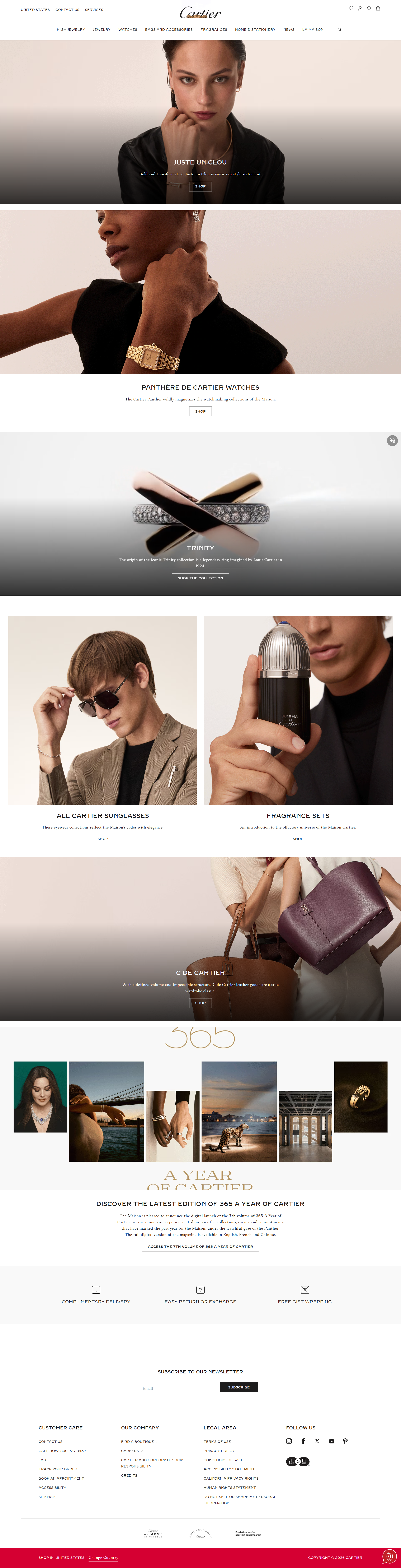
A gold standard for luxury jewelry websites. Cartier sets the benchmark for luxury jewelry websites by doing less and doing it perfectly. The site uses generous white space, refined typography, and controlled imagery, giving each product a rare and valuable look. Nothing is rushed or crowded, which mirrors the in-store experience of a high-end jeweler.
We chose Cartier because it shows how restraint can be a powerful conversion tool. The website doesn’t rely on aggressive CTAs or cluttered layouts; instead, it builds desire through pacing, storytelling, and confidence.
2. Tiffany & Co.
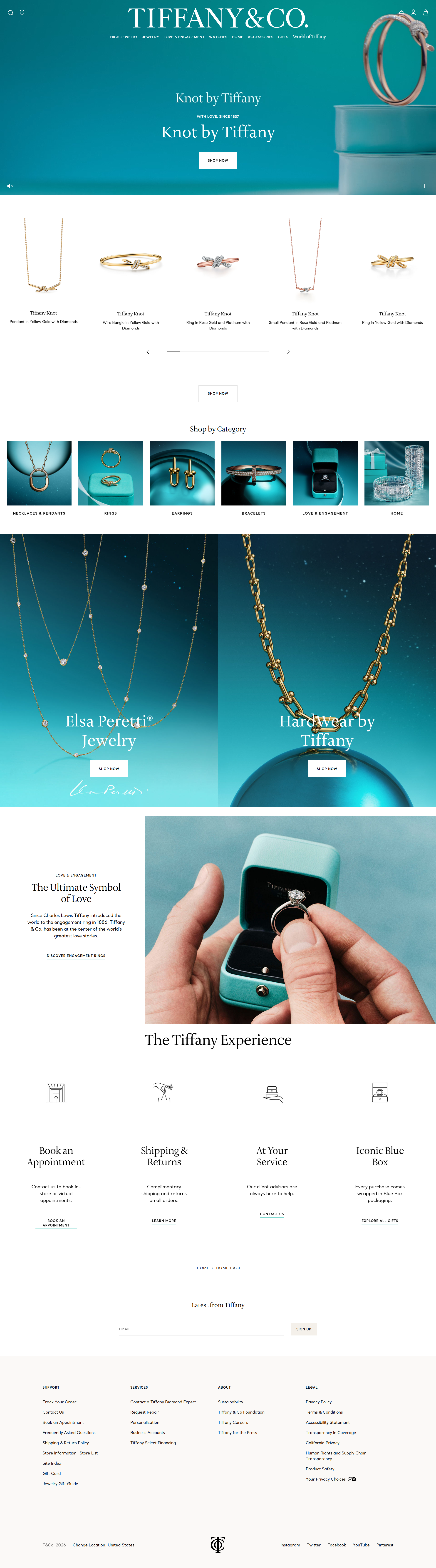
An iconic example of how brand heritage, editorial content, and ecommerce can coexist without overwhelming the shopper.
Tiffany & Co.’s website excellently blends heritage with modern ecommerce. The brand’s history is woven into the browsing experience through editorial-style content, iconic visuals, and thoughtful copy that reinforces trust and legacy.
This site made the list because it proves that strong branding and storytelling can coexist with a smooth shopping experience. It’s a great example for jewelers who want to sell emotion and meaning.
3. Swarovski
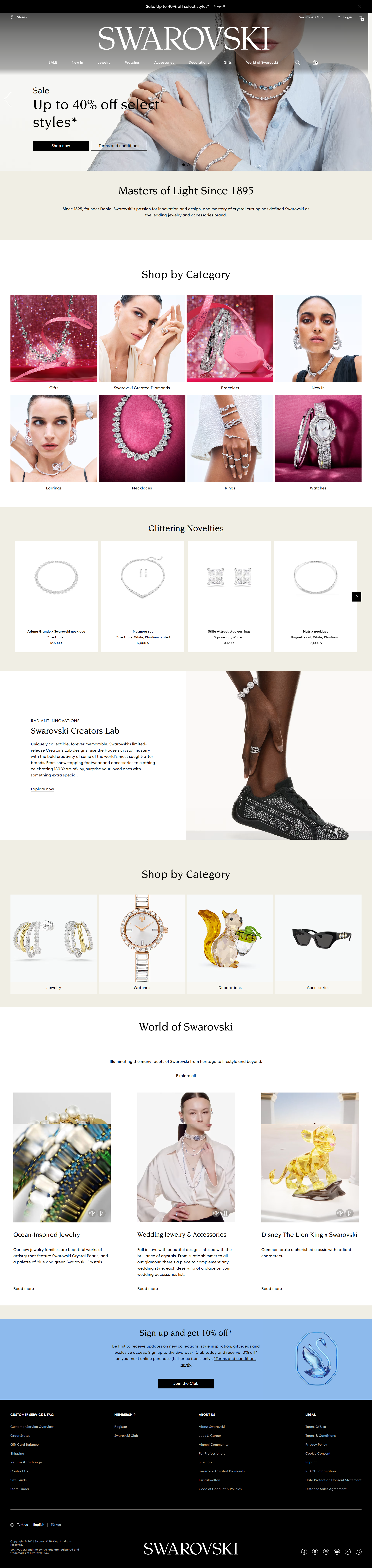
Swarovski is an excellent example of how to manage a large jewelry catalog without overwhelming users. Clear navigation, smart filtering, and consistent product layouts make it easy to browse thousands of items while still feeling guided.
We included Swarovski because it demonstrates how usability scales. For jewelry brands with wide product ranges, this site shows how structure and clarity directly impact conversion and user confidence.
4. Mejuri
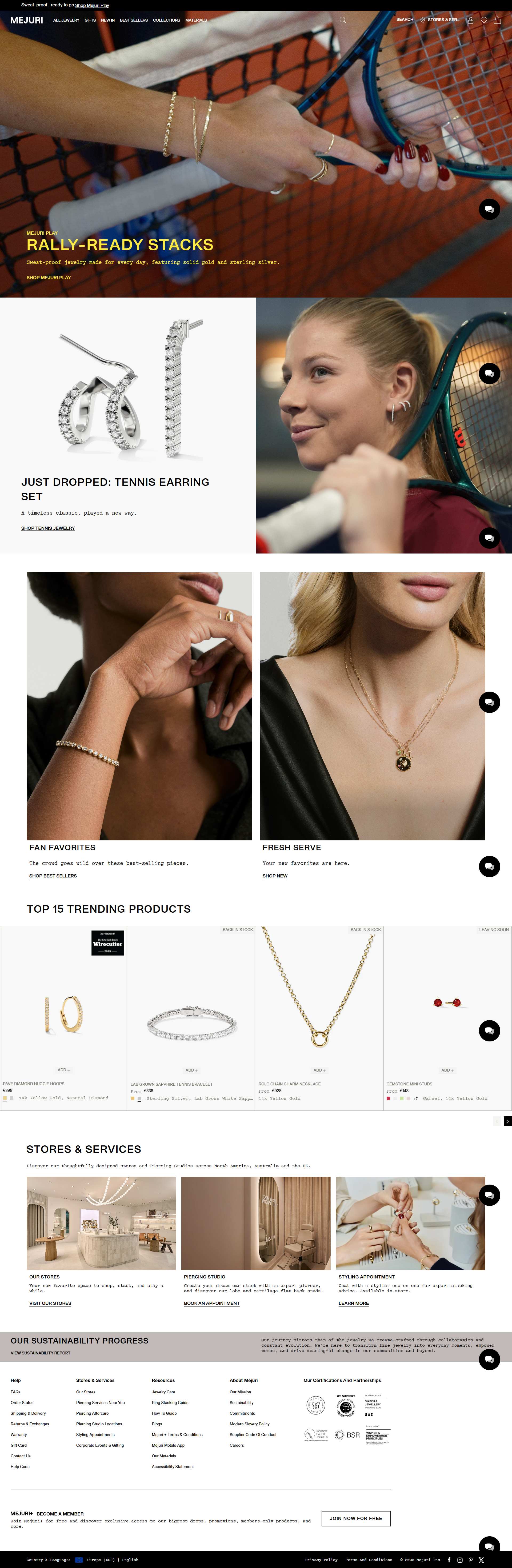
Mejuri’s website is built for modern, direct-to-consumer shoppers. It combines lifestyle imagery, educational content, and social proof to make fine jewelry feel approachable and wearable, rather than intimidating.
This site earns its spot because it shows how contemporary jewelers can lower purchase friction. Mejuri focuses on transparency, everyday styling, and clear pricing, which are key for attracting younger or first-time buyers.
5. Greenwich St. Jewelers
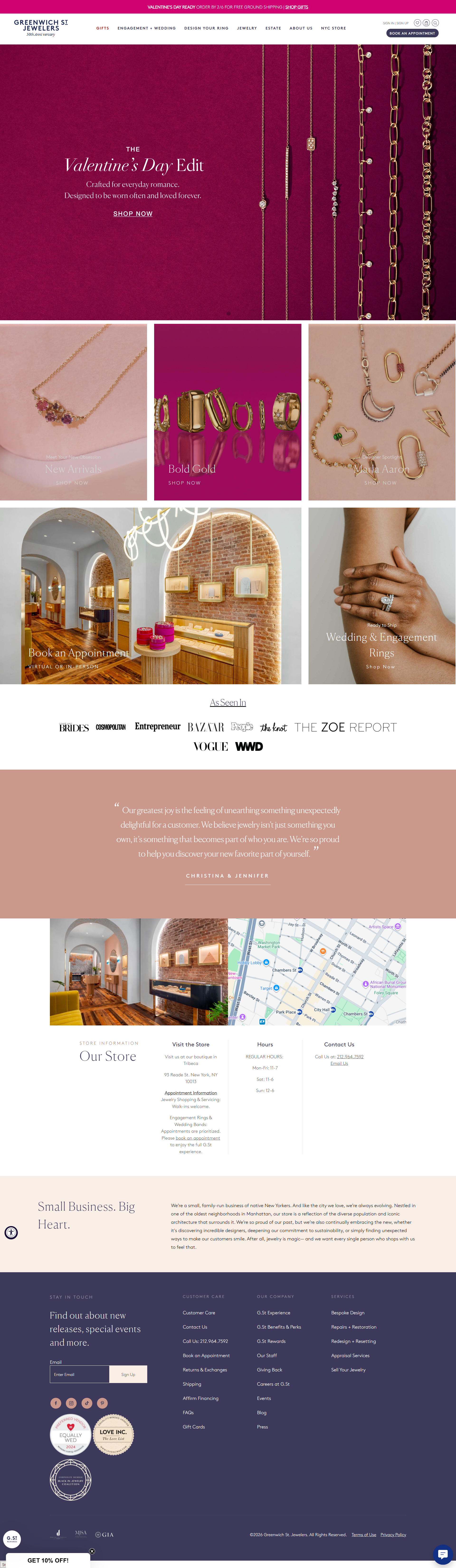
Greenwich St. Jewelers shows how effectively it builds trust online. The site highlights expert guidance, virtual consultations, educational resources, and real human support, along with its products.
We chose this example because jewelry is a high-trust purchase, and this site addresses that head-on. It’s a strong reference for jewelers who want to replicate the in-store advisor experience online.
6. The Diamond Store
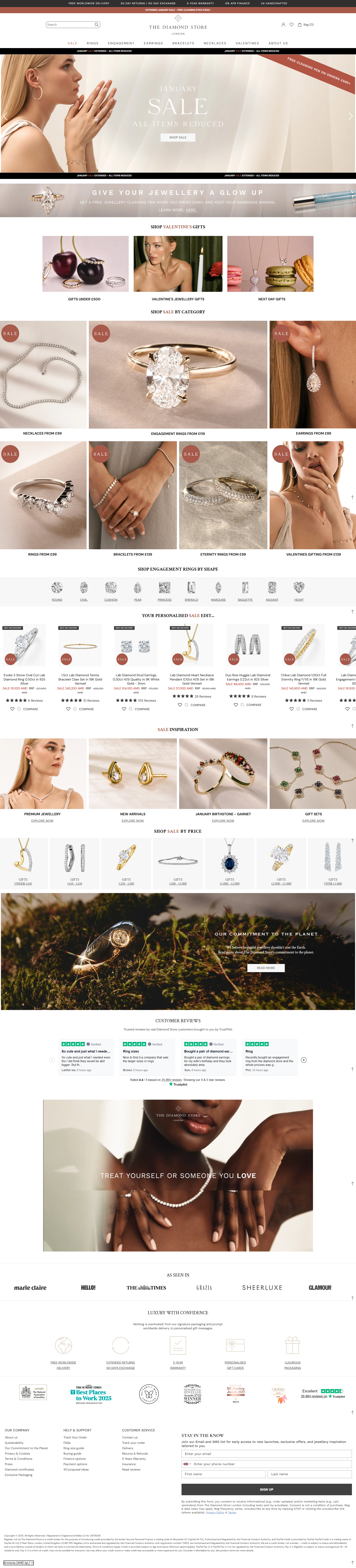
Highly transactional and optimized for buyers who want specs, pricing clarity, and comparisons. Product pages are packed with specifications, certifications, and pricing transparency, helping customers make informed decisions.
The Dimon Store’s website made the list because it excels at reducing uncertainty. For diamond and engagement ring sellers, especially, it’s a great example of how thorough product information can drive confidence and conversions.
7. Heera Diamonds

Heera Diamonds focuses heavily on education, guiding users through diamond quality, cuts, and selection before pushing a sale. The site positions itself as a trusted expert rather than just a retailer.
We included Heera Diamonds because it shows how education can be a competitive advantage. When customers understand what they’re buying, they’re more likely to trust the brand and complete high-value purchases.
8. Aurate New York
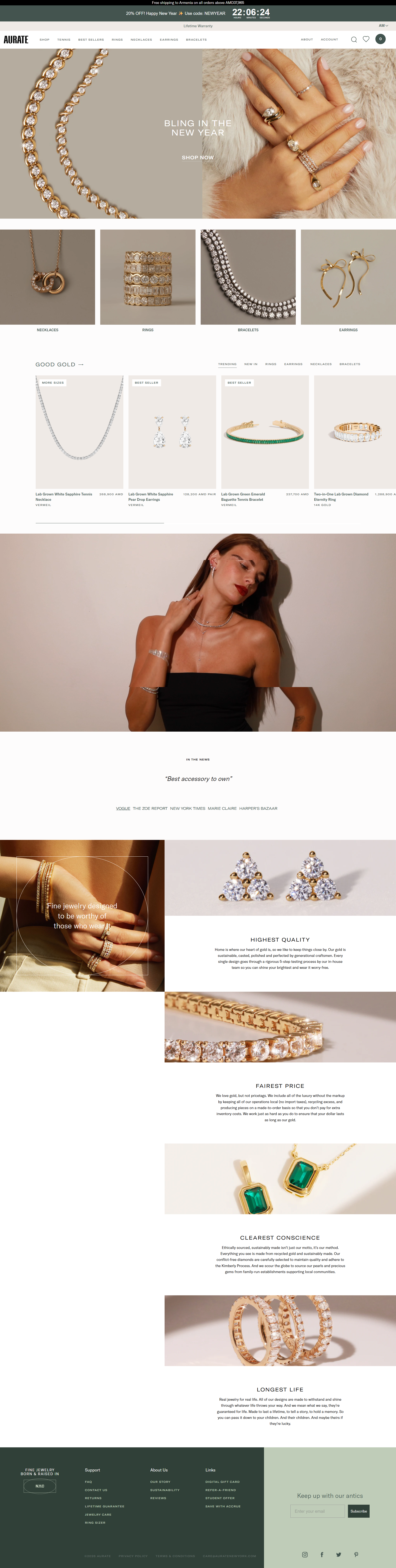
Aurate’s website is modern and values-driven. It places transparency, ethical sourcing, and sustainability at the forefront, aligning the brand with the priorities of conscious consumers.
This site belongs on the list because it demonstrates how values can be integrated directly into ecommerce. Aurate shows that trust isn’t built only through design but through clear messaging and brand principles.
9. Sophie Buhai
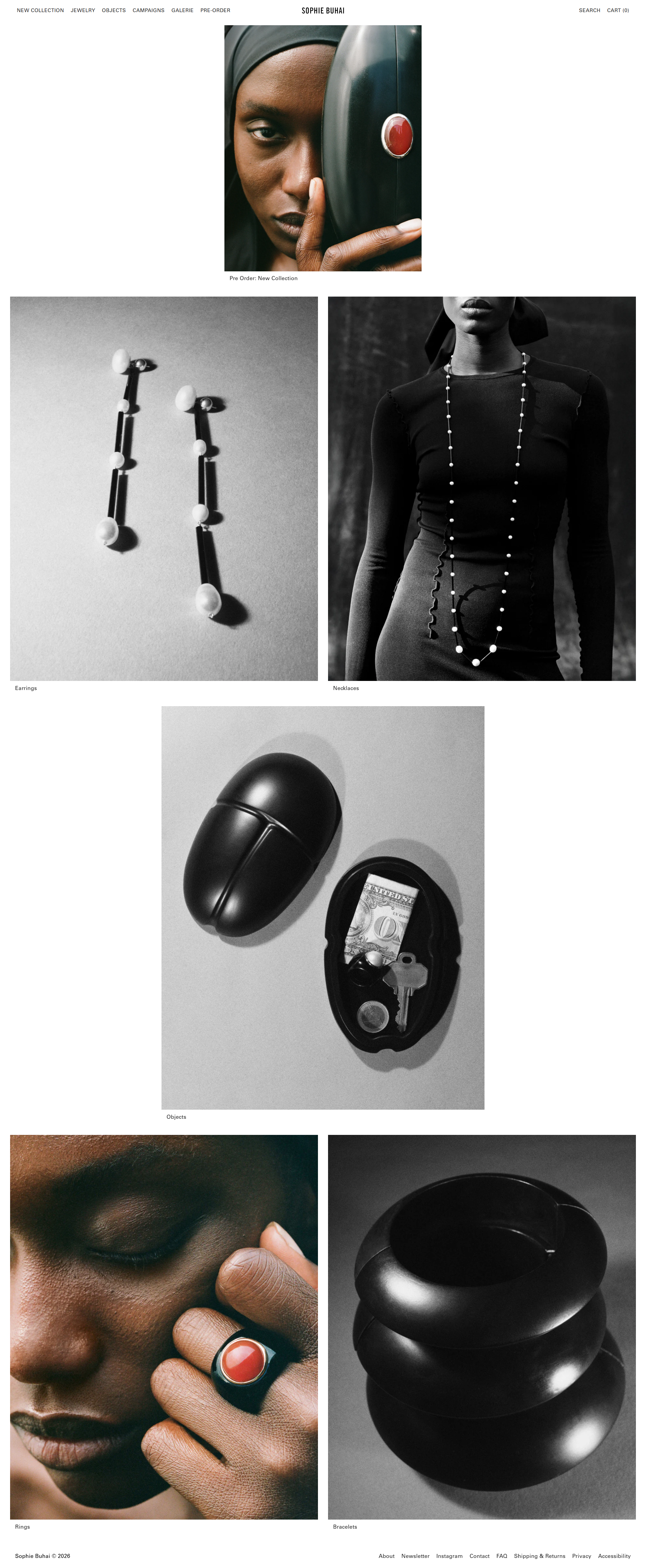
Sophie Buhai’s website is minimalist and art-forward, acting almost like a digital gallery. The design puts craftsmanship and form above sales tactics, which suits the brand’s positioning perfectly.
We included this example to represent boutique and designer-led jewelry brands. It shows how a smaller collection can still feel premium and intentional when the website mirrors the designer’s aesthetic vision.
10. Bluboho
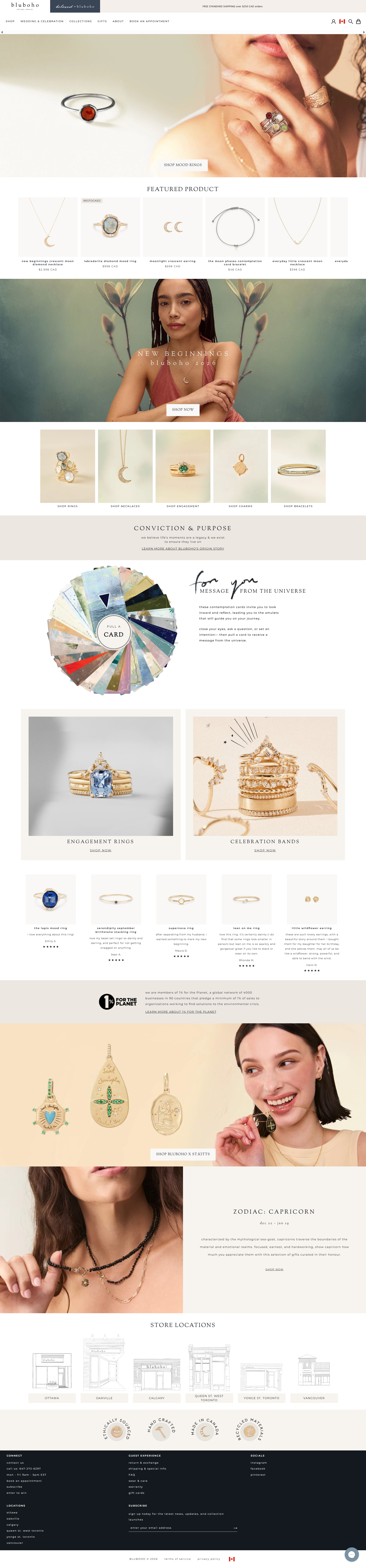
Bluboho uses storytelling to create emotional connections with its audience. The site emphasizes meaning, sustainability, and symbolism, helping customers feel like they’re buying something personal — not just decorative.
This website made the list because it shows how narrative drives value. For jewelers selling meaning and milestones, Bluboho is a beautiful aesthetic representation.
Found inspiration? Your website is just a few clicks away. Start
Build your website in 1 minute
with 10Web AI Website Builder to effortlessly bring your vision to life.
Conclusion
The best jewelry website examples show that success comes from more than elegant design. High-performing jewelry websites combine strong visuals with clear product pages, thoughtful trust signals, and a smooth buying experience that helps customers feel confident before they purchase.
Your inspiration can come from luxury brands, modern DTC stores, or boutique designers; in every case, the goal is the same: balance aesthetics with performance. With today’s AI-native workflows, like 10Web’s Vibe Coding approach, you’re no longer limited to rigid jewelry store website templates or slow, manual builds. Use these examples as guidance, focus on clarity and trust, and turn your jewelry website into a storefront that genuinely supports long-term growth.
Found inspiration? Your website is just a few clicks away. Start
Build your website in 1 minute
with 10Web AI Website Builder to effortlessly bring your vision to life.
FAQ
How do I introduce my jewelry business?
Where can I find free jewelry website templates?
What content should I include on a jewelry site?
What features make a jewelry website effective?
How to make a jewelry website?